
Credit Score: What It Is, What Affects It, and How to Improve It
Understand how credit scores work, what information can influence them, how common score ranges are interpreted, and which habits may help strengthen your credit profile over time.
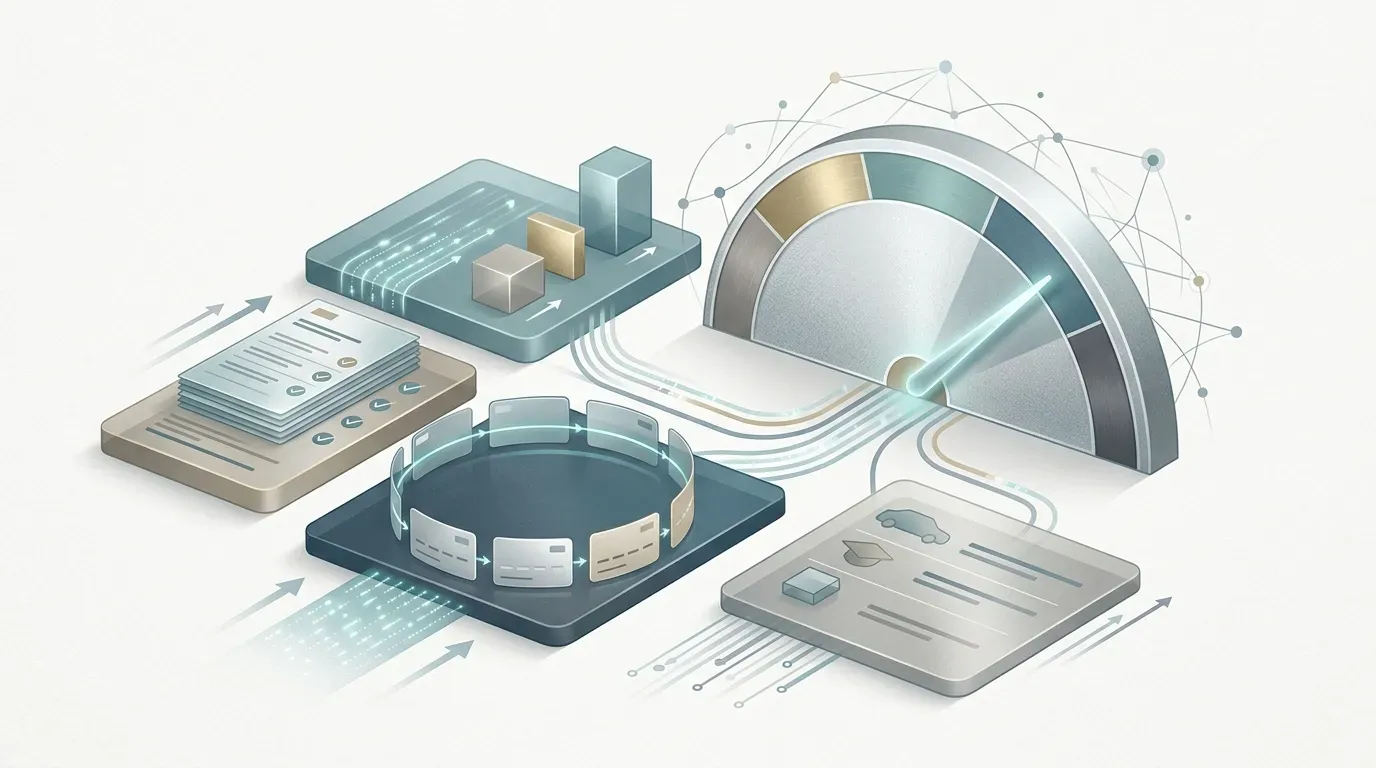
A credit score turns information from your credit history into a number that helps lenders estimate credit risk.
The idea is simple, but credit scores are often misunderstood. You do not have one permanent score stored somewhere and used by every lender. Different scoring models can analyze information from different credit reports, and the number can change as the underlying data changes.
That is why the most useful goal is not obsessing over a perfect number. It is understanding what sits behind the score.
Paying bills reliably, keeping revolving balances manageable, applying for new credit thoughtfully, and reviewing your credit reports for errors can all contribute to a healthier credit profile. Those habits matter more than trying to find a shortcut that promises an instant increase.
What Is a Credit Score?
A credit score is a numerical estimate of credit risk based largely on information contained in a credit report.
In the United States, lenders may use credit scores when evaluating applications for credit cards, auto loans, mortgages, personal loans, and other forms of borrowing. A higher score generally represents lower predicted credit risk, but the score is only one part of a lender's decision.
A scoring model may consider information such as:
- whether credit obligations have been paid on time
- outstanding debt
- how much available revolving credit is being used
- how long credit accounts have existed
- the number and types of accounts in the credit history
- recent applications for credit
- serious negative information such as collections or bankruptcy
The exact calculation depends on the scoring model.
This is important because two legitimate services can show different credit scores for the same person at the same time.
Why You Can Have More Than One Credit Score
It is more accurate to think of credit scores as a group of calculations rather than one universal number.
Your scores can differ because:
- different scoring models are being used
- different versions of a model are being used
- information comes from different credit bureaus
- the scores were calculated on different dates
- the lender is using a model designed for a particular type of credit product
- information in one credit report differs from another
FICO is one of the best-known credit-scoring systems in the United States, but it is not the only one.
Even within the FICO system, different versions may be used for different lending situations.
That explains why a score shown by a banking app may not exactly match the number a lender sees during an application.
Before comparing two scores, check which scoring model and credit-reporting source produced each one.
What Is Considered a Good Credit Score?
For commonly used base FICO Scores, the range generally runs from 300 to 850.
| FICO Score Range | General Rating |
|---|---|
| 300–579 | Poor |
| 580–669 | Fair |
| 670–739 | Good |
| 740–799 | Very Good |
| 800–850 | Exceptional |
Under this framework, 670 begins the range FICO describes as "Good."
These categories are reference points, not approval guarantees.
A particular lender can set its own underwriting requirements. Someone with a higher score is not automatically approved, and someone with a lower score is not automatically declined.
Depending on the product, lenders may also evaluate factors such as income, existing debt, loan amount, collateral, debt-to-income ratio, and other application information.
So the question "What score do I need?" does not have one answer for every borrower or every credit product.
What Affects Your Credit Score?
No single rule explains every scoring model, but several parts of a credit profile consistently matter.
Payment history
How reliably you have paid credit obligations is an important part of your credit history.
Late payments, missed payments, collections, and other serious payment problems can negatively affect a credit profile. A pattern of making payments as agreed generally works in the opposite direction.
For someone trying to improve a credit score, preventing new missed payments is usually more useful than looking for a quick scoring trick.
Automatic payments and payment reminders can help reduce the risk of forgetting a due date, provided enough money is available to cover the payment.
Credit utilization
Credit utilization describes how much of your available revolving credit is being used.
Suppose a credit card has a $5,000 limit and a $1,000 reported balance.
The utilization on that account is:
$1,000 ÷ $5,000 = 20%
Scoring models may consider utilization on individual accounts as well as across multiple revolving accounts.
Lower utilization generally indicates that less of your available revolving credit is being used.
You may frequently see 30% mentioned as a guideline. Do not treat that figure as a universal cutoff where a score suddenly becomes good or bad. Credit scoring is more complex, and lower utilization can still be preferable depending on the overall credit profile and model being used.
You also do not need to carry an interest-bearing balance simply to build credit.
Length of credit history
The age of your credit history can also matter.
An account that has been managed for years provides more history than one opened recently.
That does not mean every old account must remain open forever. An account with an annual fee, poor terms, or other drawbacks may no longer make sense.
It does mean that opening and closing accounts can alter parts of the credit profile used by scoring models.
New credit activity
Applying for credit can result in a hard inquiry.
A single application does not automatically create a serious problem, but repeated applications and multiple newly opened accounts can change the information being evaluated by a scoring model.
A practical approach is to apply for credit because you genuinely need the product, not because opening more accounts seems like a shortcut to a better score.
Types of credit accounts
A credit report can contain different forms of borrowing.
These may include revolving accounts such as credit cards and installment accounts such as auto loans, student loans, or mortgages.
Scoring models may consider the types of accounts appearing in your history.
However, this is not a reason to borrow money unnecessarily. Taking out a loan and paying interest solely to try to improve a score can create costs without providing a worthwhile financial benefit.
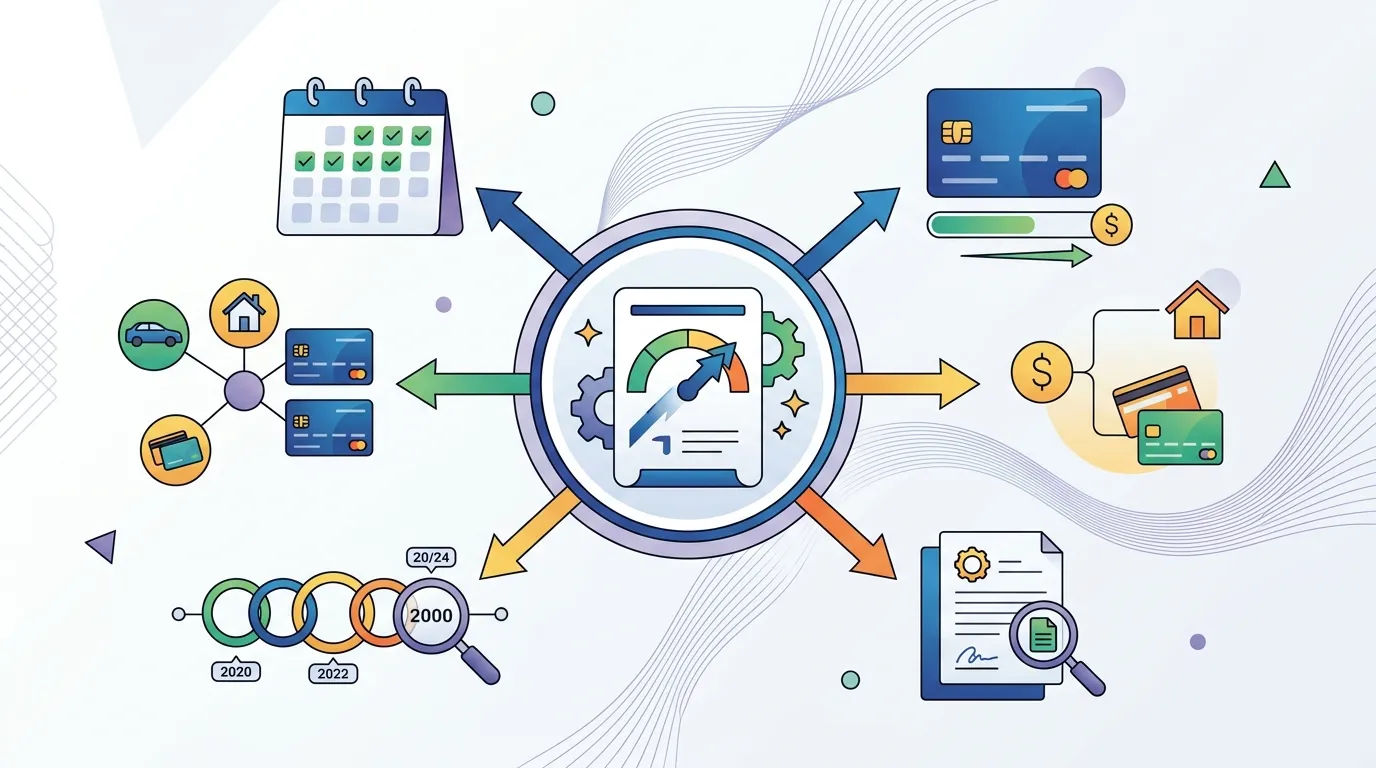
Credit Report vs. Credit Score
A credit report and a credit score are closely connected, but they are not the same thing.
A credit report is a record of information about your borrowing history.
A credit score is a number generated when a scoring model analyzes information from that report.
A U.S. credit report may contain information such as:
- account balances
- payment history
- account opening dates
- credit limits
- collections
- credit inquiries
- account status
The three major nationwide credit reporting companies are Equifax, Experian, and TransUnion.
Because the score is calculated from credit-report information, an error in a report can potentially affect the score produced from that information.
That is why checking your reports still matters even if you already monitor a score through your bank, card issuer, or another service.
How to Improve Your Credit Score
Improving credit is usually a process of improving the underlying information in your credit history.
There is no reliable method that guarantees a specific number of points by a particular date.
Keep payments on time
Start with one of the most basic habits: avoid new late payments.
Use reminders or automatic payments where appropriate, and regularly confirm that scheduled payments have actually gone through.
If an account is already behind, bringing it current and establishing a consistent payment pattern may improve the overall profile over time. The exact effect on a score will depend on the rest of the credit file and the model being used.
Reduce revolving balances
High revolving balances can raise credit utilization.
Consider a simplified example with two cards:
- Card A has a $4,000 limit and a $2,000 reported balance.
- Card B has a $6,000 limit and a $1,000 reported balance.
Together, the cards provide $10,000 of available revolving credit and have $3,000 in reported balances.
Overall utilization is therefore 30%.
If the reported balances were reduced to $1,000 while the limits remained unchanged, overall utilization would fall to 10%.
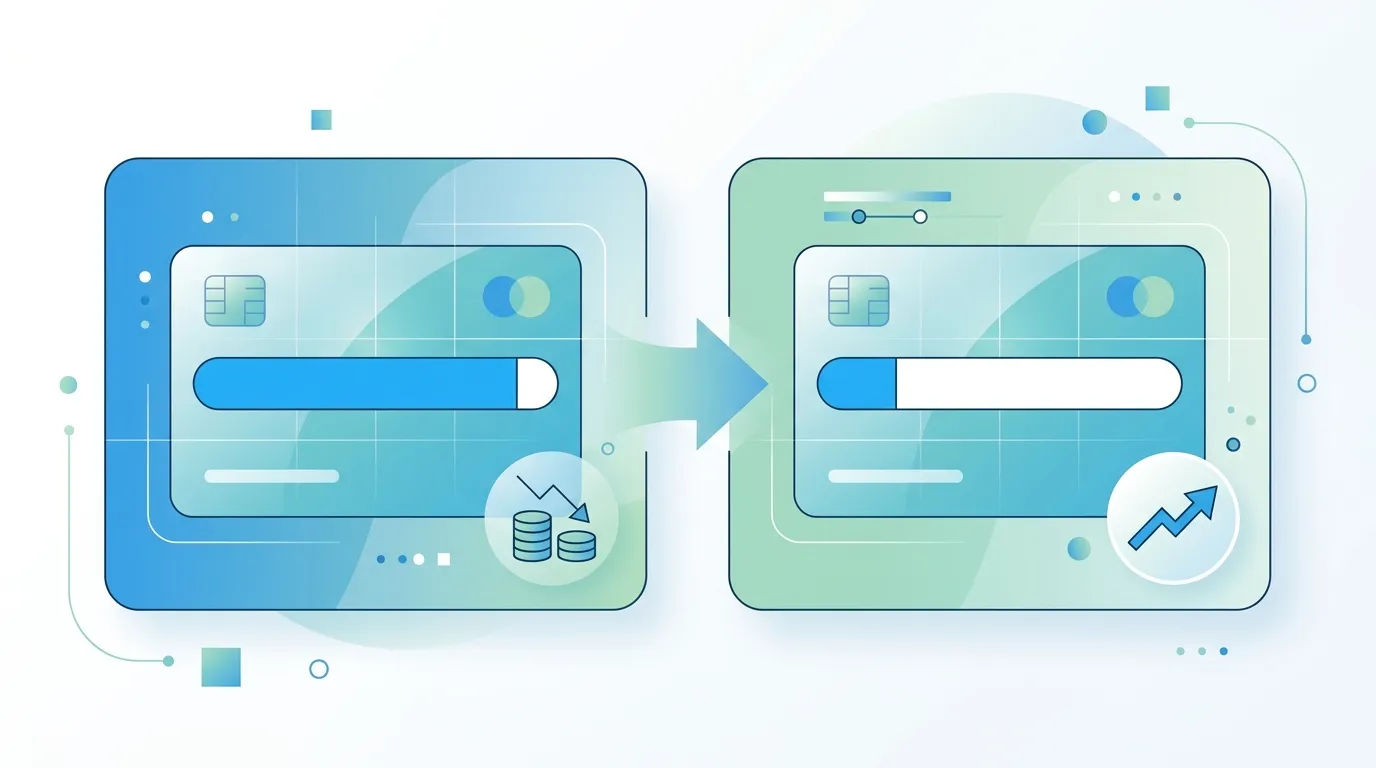
This example demonstrates the calculation only. It does not imply that moving from 30% to 10% will produce a particular credit-score increase.
Scoring models can evaluate more than one utilization measure, and creditors may report balances at different points in the billing cycle.
Review your credit reports for errors
Not every credit problem is caused by the consumer's actual borrowing behavior.
A report could contain information such as:
- an account that does not belong to you
- an incorrect late-payment record
- duplicate information
- an inaccurate balance
- an account listed with the wrong status
If you identify information that appears inaccurate, follow the appropriate dispute process with the credit reporting company and, where relevant, the company that supplied the information.
Do not assume that a company can legitimately remove accurate negative information simply because you pay for a "credit repair" service.
Correcting an error and trying to erase accurate information are different things.
Be selective about new credit
Opening a new account may increase your total available credit, but that does not mean repeatedly applying for cards is an effective improvement strategy.
New applications and accounts also add new activity to your credit history.
Choose new credit because the product fits a genuine financial need.
Think before closing a credit card
Closing a card can sometimes make sense, particularly if it has a fee, poor terms, or encourages spending you would rather avoid.
But consider how the closure affects your available revolving credit.
Suppose you owe $1,000 and currently have $10,000 of total revolving credit available.
Your overall utilization is 10%.
If an unused card is closed and total available credit falls to $5,000 while the reported balance remains $1,000, utilization becomes 20%.
That does not guarantee that the credit score will fall. It simply shows how closing a revolving account can change one of the inputs used in credit scoring.
How to Build Credit With Little or No History
Having little credit history is not the same as having a history of missed payments.
Someone who is new to credit may simply have too little reported information for certain scoring models to evaluate.
The goal should be to establish manageable credit and demonstrate reliable repayment, not to borrow as much money as possible.
Depending on eligibility and availability, people building credit may consider options such as:
- a starter credit card
- a secured credit card
- becoming an authorized user on a responsibly managed account
- certain credit-building products offered by financial institutions
Each option has its own fees, eligibility rules, and reporting practices.
Before using a product specifically to build credit, confirm whether and how the account is reported to the relevant credit bureaus.
Once an account is established, the fundamental habits remain simple: manage the balance carefully and pay obligations as agreed.
How Quickly Can a Credit Score Improve?
There is no universal timeline.
Some changes may appear relatively quickly after updated account balances are reported. Other improvements depend on establishing a stronger pattern over many months or longer.
The timeline can depend on:
- what is currently affecting the score
- how serious any negative information is
- how old that information is
- how many accounts appear in the credit file
- current revolving balances
- whether an inaccurate item has been corrected
- which scoring model is being used
In the United States, negative information about account-payment history can generally remain on a credit report for up to seven years, although reporting periods differ depending on the type of information.
That does not mean a credit score stays frozen for seven years.
Credit reports continue to change, and scoring models evaluate the broader file as new information is reported.
Credit Score Myths That Can Cost You Money
"I need to carry a balance to build credit"
You generally do not need to pay credit card interest simply to establish payment history.
A card can report activity even when you pay the balance according to the account terms rather than deliberately carrying debt from month to month.
"Opening several cards will build credit faster"
More accounts do not automatically produce a better score.
Several applications in a short period can add inquiries and new accounts while giving you more credit to manage.
"30% utilization is the perfect target"
Thirty percent is often discussed as a guideline, not a universal scoring threshold.
Do not intentionally increase a low balance simply to reach 30%.
Managing revolving balances responsibly is more important than trying to hit one supposedly perfect percentage.
"Closing an old card always hurts your score"
The effect depends on the rest of the credit profile.
Closing a card can change available credit and therefore affect utilization, but that does not mean every account closure automatically reduces every credit score.
"A high score guarantees approval"
A credit score can be important, but underwriting decisions usually involve more than the score alone.
A lender may also consider income, existing debt, loan characteristics, and its own approval standards.
When Your Credit Score Matters Most
Credit scores become especially relevant when you plan to apply for financing.
A stronger credit profile may improve access to certain products or more favorable terms, but no particular score guarantees a specific outcome.
Before a major application, such as a mortgage or auto loan, it can be useful to focus on the fundamentals:
- make required payments on time
- keep revolving balances manageable
- avoid unnecessary applications
- review credit reports for errors
- confirm that reported account information is accurate
Trying to transform a credit profile a few days before a major application is much harder than maintaining healthy habits over time.
Focus on the Credit Profile, Not Just the Number
A credit score can be useful, but the number should not become the entire financial goal.
The stronger objective is building a credit profile that reflects manageable borrowing and consistent repayment.
That means paying obligations reliably, controlling revolving balances, checking credit information for errors, and taking on new debt only when it serves a sensible purpose.
Those habits can improve more than a score. They can also reduce interest costs, prevent unnecessary debt, and make future borrowing decisions easier to manage.
And if two services show different credit scores, do not automatically assume something is wrong.
Check which model, bureau, and date each score uses. Then look beyond the number and focus on the credit information that produced it.
CFPB: Understand your credit score
CFPB: How long does negative information stay on a credit report?
Try the Financial Advisor Fee Calculator
Calculate how management fees impact your total investment portfolio wealth.
Published by FinanzVault Editorial Team
FinanzVault provides independent, educational finance guides and transparent calculation tools. Our content is thoroughly researched, fact-checked against official financial data sources, and designed to help you make informed decisions.
Related Financial Guides

Truck Accident Liability: Who May Be Responsible and How Insurance Claims Are Affected
Learn how responsibility may be investigated after a commercial truck accident, which parties can become relevant, and how fault and evidence can affect an insurance claim.