Truck Accident Insurance Claim: What to Do, What to Document, and What Happens Next
Learn what to do after a commercial truck accident, which evidence may matter, who could be involved in the claim, and how the insurance process can develop from reporting through resolution.
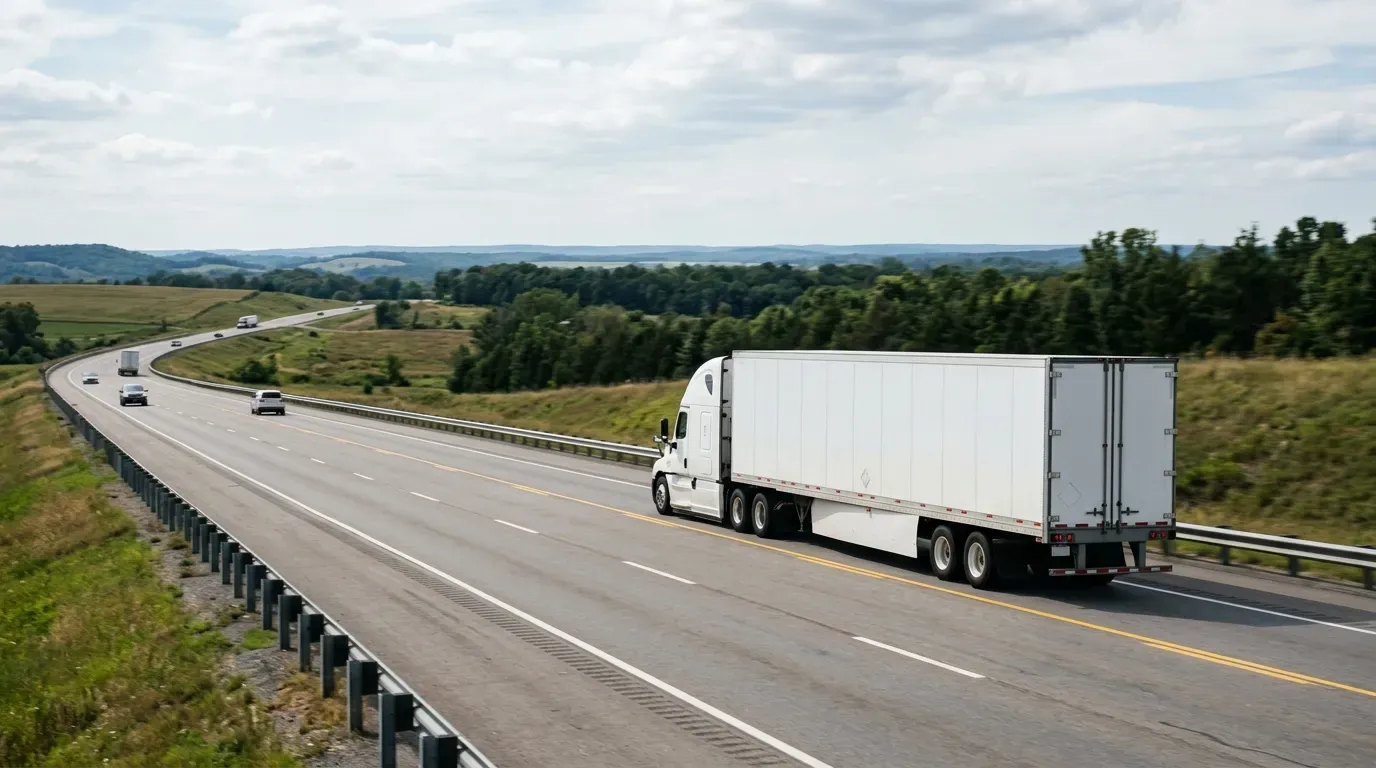
A collision involving a commercial truck can create a more complicated insurance claim than an ordinary two-car accident.
The size of the vehicle is only part of the reason. A trucking operation can involve a driver, motor carrier, vehicle owner, cargo company, maintenance provider, and several insurance policies. Important evidence may also be held by the trucking business rather than by the people involved in the crash.
For someone trying to understand a truck accident insurance claim, the most useful approach is to focus on three things early: personal safety, accurate documentation, and preservation of information that may later help explain what happened.
The exact process varies by state, insurer, severity of the accident, and the parties involved, but the general steps below provide a practical framework.
Why a Truck Accident Claim Can Be More Complicated
A truck accident claim can involve more parties than a typical personal auto claim.
Depending on the facts, potentially relevant parties may include:
- the truck driver
- the trucking or motor-carrier company
- a separate owner or leasing company
- a cargo-loading business
- a maintenance or repair provider
- another driver involved in the collision
That does not mean every accident involves all of these parties, or that each party is legally responsible. Responsibility depends on the facts, contracts, state law, federal rules where applicable, and the cause of the accident.
Commercial trucking can also involve commercial auto insurance requirements that differ from ordinary personal auto coverage. Interstate motor carriers may be subject to federal financial-responsibility rules, while intrastate operations can also be governed by state requirements.
Avoid presenting one universal insurance limit as applying to every truck, carrier, or claim.
Another difference is evidence. Commercial vehicles may have records relating to drivers, maintenance, dispatching, electronic logging, vehicle operation, cargo, and company procedures. Some records may be routinely overwritten or retained only for specified periods.
That makes early documentation and evidence preservation especially important in a serious claim.
What to Do Immediately After a Truck Accident
The first priority is safety, not insurance paperwork.
Where circumstances allow, these steps can help create a clearer record of the event.
Get medical attention when needed
Seek emergency assistance for obvious injuries and consider medical evaluation when symptoms appear after the collision.
Some injuries are not immediately apparent during the stress of an accident.
Medical records can also establish when symptoms were first reported and how treatment progressed. That can become relevant when an insurer later evaluates whether an injury is connected to the crash.
Report the accident to law enforcement
For a serious collision, contacting police or the appropriate local authority can create an official record of the event.
A crash report may document information such as:
- the parties involved
- vehicle details
- location
- witness information
- initial observations
- citations, where applicable
The report does not automatically decide legal fault, but it can become an important reference point during an insurance investigation.
Exchange identifying and insurance information
Collect the basic information needed to identify the parties and vehicles.
Where available, this can include:
- driver's name
- driver's contact information
- driver's license information
- trucking-company or motor-carrier name
- vehicle and trailer information
- insurance information
- visible USDOT or other carrier-identification numbers
Do not interfere with emergency responders or place yourself in danger merely to obtain a photograph or number.
Avoid guessing about fault
The moments after an accident can be confusing.
Stick to factual observations when speaking with police, insurers, or other drivers. Avoid speculating about speed, blame, injuries, or events you did not actually see.
A simple statement made under stress can later be interpreted differently from what was intended.
Get witness information
If independent witnesses saw the collision, collect their names and contact details where possible.
A neutral witness can become especially useful when the drivers later disagree about how the accident happened.
What to Document at the Scene
Good documentation does not require turning the scene into a private investigation.
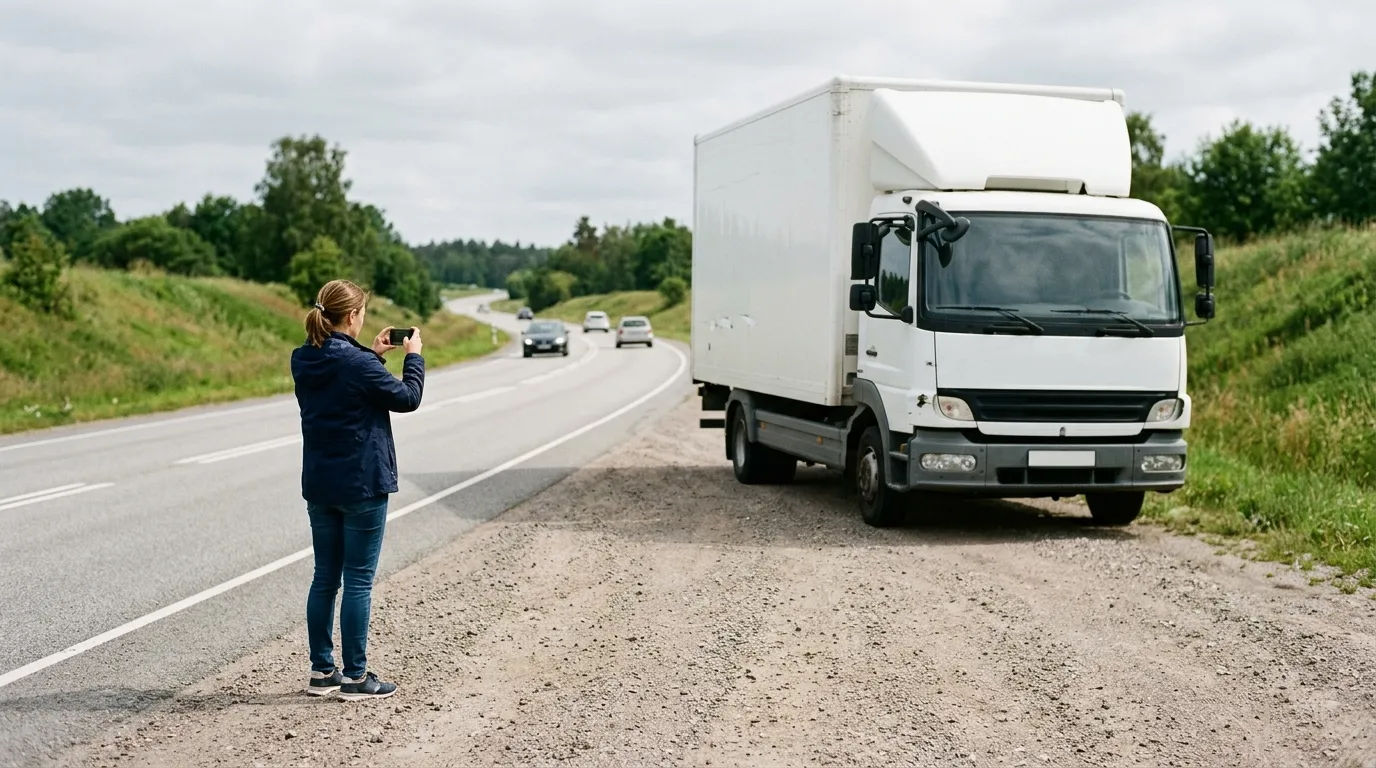
If it is safe and lawful to do so, photographs and notes can preserve information that may disappear once vehicles are moved and the road is cleared.
Useful documentation can include:
- vehicle positions
- visible vehicle damage
- license plates
- truck and trailer identifying information
- road layout
- lane markings
- traffic signals or signs
- weather and lighting conditions
- skid marks or debris
- nearby businesses or properties that may have cameras
- witness contact information
- police department and report information
- personal dashcam footage, if available
Write down what you remember as soon as practical.
Memory can become less precise over time, especially after a stressful event.
Who May Be Involved in a Truck Accident Claim?
One of the reasons these claims can take longer is that responsibility may not be limited to the person behind the wheel.
The truck driver
The driver's conduct is often a central part of the investigation.
Relevant issues can include speed, following distance, lane changes, distraction, impairment, fatigue, or compliance with traffic laws.
No single factor should be assumed without evidence.
The motor carrier
The trucking company may have responsibilities connected with the driver's work and with its own business practices.
Depending on the circumstances, questions can arise about:
- driver qualification
- supervision
- training
- dispatching
- maintenance practices
- safety procedures
Whether the motor carrier is legally responsible depends on the facts and applicable law.
A vehicle owner or leasing company
The company operating the truck is not always the same entity that owns it.
Leasing arrangements are common in commercial transportation, which can add another contractual relationship to the investigation.
Cargo-loading parties
A separate company may sometimes load or secure cargo.
If cargo shifts, falls, or contributes to loss of vehicle control, investigators may review how the load was prepared and secured.
Maintenance or repair providers
Mechanical condition can become relevant when brakes, tires, steering, lighting, or other vehicle systems are questioned.
Maintenance records may help determine whether a problem was known, recently repaired, or properly addressed.
How the Truck Accident Insurance Claim Process Usually Develops
Every claim is different, but many move through several recognizable stages.

1. Reporting the accident
The accident is reported to the appropriate insurers.
Depending on the circumstances, this may include the injured person's own insurer, the truck's commercial insurer, or insurers connected with other potentially responsible parties.
Report deadlines can exist under insurance policies, so unnecessary delay is best avoided.
2. Investigation
Insurers may collect:
- crash reports
- photographs
- witness statements
- vehicle information
- medical documentation
- repair estimates
- driver information
- business or carrier records
More complex cases may also involve specialists who analyze vehicle damage, roadway evidence, electronic data, or commercial-trucking records.
3. Preserving commercial-truck evidence
Some evidence may be held by the trucking company rather than by the injured person.
Depending on the accident, potentially relevant information can include:
- electronic logging records
- dispatch records
- driver qualification information
- maintenance records
- inspection records
- onboard electronic data
- dashcam or fleet-camera footage
- cargo records
Retention periods and technical data-storage behavior are not identical across every record or vehicle system.
Do not publish a universal claim that all truck data is erased within a specific number of days.
In serious or disputed cases, a party or legal representative may send a formal request asking that relevant evidence be preserved.
That process is commonly associated with evidence-preservation or spoliation issues, but the legal requirements and consequences depend on the jurisdiction and circumstances.
4. Medical treatment and documentation
For an injury claim, the insurer needs information about the injury itself.
That can include:
- diagnosis
- treatment received
- ongoing care
- work restrictions
- recovery progress
- medical expenses
Serious injuries can make valuation more difficult early in the process because the long-term effects may not yet be known.
That is one reason resolving a claim too quickly can create problems if future treatment or limitations have not yet become clear.
5. Liability and damage evaluation
The insurer evaluates both responsibility and claimed losses.
Depending on the claim, this may include:
- vehicle damage
- medical expenses
- documented income loss
- future treatment issues
- liability disputes
- applicable insurance limits
The amount available through insurance is not necessarily the same thing as the total value alleged in a claim.
6. Negotiation or other resolution
Some claims resolve through negotiation with an insurer.
Others remain disputed because the parties disagree about responsibility, injury severity, causation, damages, or applicable coverage.
A claim that cannot be resolved through the insurance process may eventually move into litigation, where formal court procedures can be used to obtain information and resolve disputed issues.
There is no universal settlement timeline.
A claim involving minor damage and clear facts may move relatively quickly, while a serious injury claim involving multiple parties can take much longer.
Evidence That May Matter Later
Not every truck accident requires a detailed reconstruction, but several categories of evidence can become important when facts are disputed.
These may include:
- police reports
- witness statements
- scene photographs
- medical records
- vehicle photographs
- repair records
- driver information
- dispatch records
- electronic logs
- available onboard data
- maintenance and inspection information
- cargo records
- available video footage
The relevance of each item depends on the accident.
For example, maintenance records may matter greatly if mechanical failure is alleged but may be far less important in a crash caused by an unrelated driver.
Evidence should be evaluated in context rather than treated as a checklist where every item is automatically necessary.
Common Mistakes That Can Complicate a Claim
Some problems arise not from the accident itself but from decisions made afterward.
Delaying necessary medical care
A long unexplained gap between an accident and medical evaluation can create questions about when an injury occurred or how serious it was.
Health needs should come first.
Giving detailed statements before understanding the request
An insurer may ask for a recorded statement.
Before agreeing, understand:
- which insurer is requesting it
- why it is being requested
- whether your own policy requires cooperation
- what information is being sought
Obligations to your own insurer can differ from requests made by another party's insurer.
Accepting a resolution before the extent of an injury is clear
An early payment can appear attractive when expenses are accumulating.
However, a final settlement can involve releasing future claims connected with the accident.
Before agreeing to a final resolution, understand what rights are being released and whether the full extent of the loss is reasonably known.
Posting detailed accident information publicly
Photos, comments, activity updates, or statements on social media can sometimes become relevant to an insurer's investigation or later dispute.
Avoid assuming that a post visible to friends will remain private.
Missing important deadlines
Insurance policies can contain reporting requirements, while states impose different legal filing deadlines.
No single statute-of-limitations period applies nationwide.
If a deadline may matter, confirm the current rule for the applicable state rather than relying on a generic online timeframe.
What Can Affect the Outcome of a Truck Accident Claim?
There is no formula that predicts the result of a truck accident insurance claim.
Several factors can influence how it develops.
Strength of the liability evidence
Clear photographs, witness accounts, official reports, electronic records, or other reliable evidence can help establish what happened.
When the available evidence points in different directions, the claim is more likely to remain disputed.
State fault rules
States do not all handle shared fault the same way.
In some jurisdictions, a person's recovery may be reduced when they share responsibility. Other states use different or more restrictive rules.
Avoid applying one state's negligence framework to a national audience.
Nature of the injuries
A short-term injury with a straightforward recovery is easier to evaluate than one involving surgery, permanent limitation, long-term treatment, or uncertain future effects.
More serious claims typically require more medical documentation.
Available insurance coverage
Commercial trucking can involve larger liability policies than ordinary personal auto insurance, but the exact coverage available depends on the carrier, vehicle, operation, policies, and applicable rules.
Do not assume every commercial truck carries the same limit.
Number of potentially responsible parties
A claim involving a driver and one insurer can be simpler than one involving a motor carrier, owner, maintenance provider, cargo company, and several policies.
More parties can create additional investigation and coverage questions.
When Professional Help May Be Worth Considering
Not every truck accident requires an attorney or specialist.
A minor property-damage claim with clear facts may be manageable through the normal insurance process.
Professional advice may become more useful when the accident involves:
- serious or lasting injury
- disputed responsibility
- several potentially responsible parties
- questions about commercial insurance coverage
- important evidence held by the trucking company
- significant income loss
- a proposed final settlement with long-term consequences
- a filing deadline that is unclear
A lawyer can explain legal rights and deadlines for the relevant jurisdiction.
FinanzVault does not provide legal representation, and this article should not be presented as a substitute for legal advice about a specific accident.
What to Keep While the Claim Is Open
Create a simple file—digital, physical, or both—and keep relevant information together.
Depending on the claim, that can include:
- insurer correspondence
- claim numbers
- police-report information
- photographs
- medical bills
- treatment records
- repair estimates
- receipts
- records of missed work
- notes from conversations with adjusters
- copies of documents submitted to insurers
Keeping organized records makes it easier to answer questions consistently and identify missing information later.
A truck accident insurance claim can involve more investigation, more parties, and more evidence than a routine personal auto claim.
The most useful early steps are straightforward: address immediate medical needs, report the collision, preserve what you can safely document, keep records organized, and avoid making assumptions about fault, insurance limits, or claim value before the facts are clear.
Published by FinanzVault Editorial Team
FinanzVault provides independent, educational finance guides and transparent calculation tools. Our content is thoroughly researched, fact-checked against official financial data sources, and designed to help you make informed decisions.
Related Financial Guides
Truck Accident Liability: Who May Be Responsible and How Insurance Claims Are Affected
Learn how responsibility may be investigated after a commercial truck accident, which parties can become relevant, and how fault and evidence can affect an insurance claim.